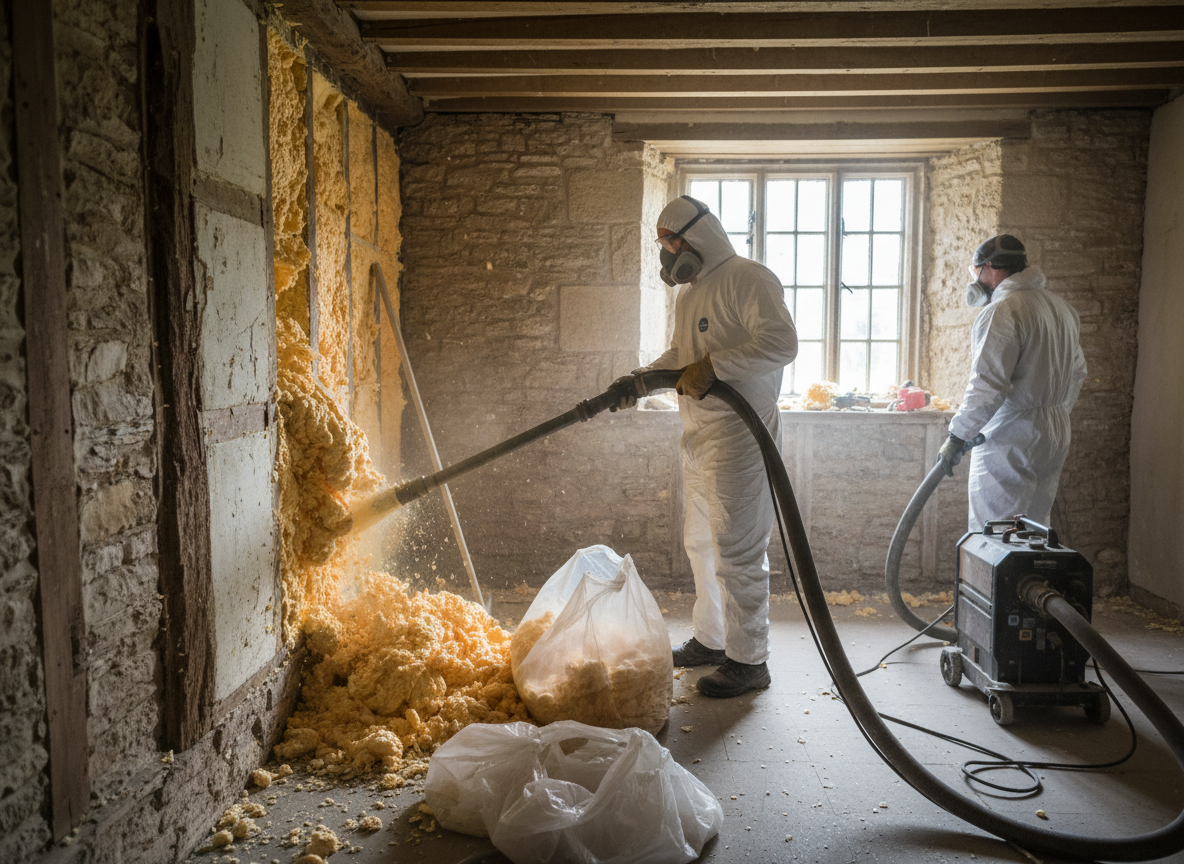
Bath’s older stone terraces and Georgian properties often received spray foam insulation in lofts and under floors during the 1990s and 2000s. Over time the closed-cell material traps moisture against timber joists and stone walls, leading to rot that only becomes visible when ceilings stain or floors feel spongy. Removing it requires cutting back to sound substrate without damaging the original lath and plaster or the thick rubble walls common in Bathwick and Widcombe.
Night calls usually come after heavy rain when water finds its way past failed felt or cracked stonework and the foam starts to delaminate. We arrive with negative-air machines and sealed chutes so dust does not migrate through the sash windows and into neighbouring properties, a frequent issue in the tight terraces around the city centre. Once the foam is stripped we inspect for hidden wet rot in the joist ends that sit directly into the stone, a detail that changes the scope of work on almost every Bath job.
Local building control expects any new insulation to meet current ventilation requirements, especially in listed buildings where breathable materials are preferred. We document the existing construction and the condition of the roof timbers before leaving site so owners have the evidence needed for any future works. Homeowners often underestimate how much the removal opens up the roof space; we always advise on temporary weatherproofing until permanent ventilation and insulation can be installed.
Technician insight
In Bath, the thing that catches most people out with 24/7 Spray Foam Removal is how the thick stone walls and tight roof voids trap moisture behind the foam. Georgian terraces in areas like Lansdown and Bear Flat often have joist ends built straight into the rubble, so once you strip the foam you find wet rot that needs addressing before any new insulation goes back in.
Night Call in a Widcombe Terrace
Heavy overnight rain caused staining on a bedroom ceiling. We found closed-cell foam that had pulled away from the rafters, allowing water to run along the joists. After setting up containment we removed the foam in sections, exposed two rotted joist ends built into the stone wall, and left the space ventilated with a report for the owner’s carpenter.
How it works
- 1
Initial Assessment
We arrive within hours, inspect the affected loft or floor void, and confirm the extent of foam and any timber damage.
- 2
Containment Setup
Negative pressure is established and dust chutes are sealed to protect the rest of the property and neighbouring homes.
- 3
Foam Extraction
Material is cut and removed in sections, with constant monitoring for hidden moisture or rot in joists and stonework.
- 4
Substrate Inspection
All exposed timber and stone is checked; any suspect sections are marked for the owner’s builder or surveyor.
- 5
Site Handover
Space is left clean and ventilated with a written report on condition and recommended next steps.
Pricing
Cost depends on access, depth of foam, and any timber repairs required; we provide a clear scope before work begins.