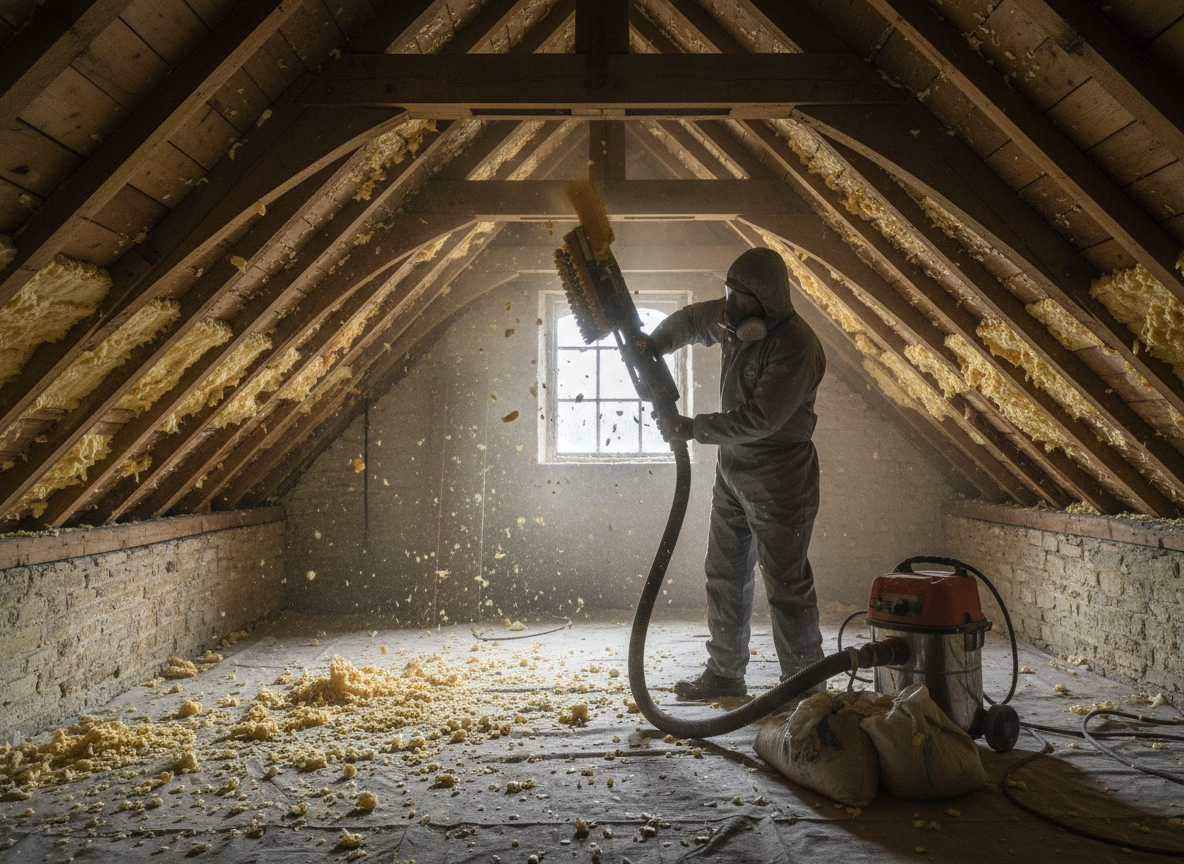
Commercial properties in Bath often feature older stone or brick construction from the Georgian and Victorian periods, with spray foam insulation added later in roof voids or wall cavities. Removing it requires careful containment to avoid damaging historic fabric or releasing particulates into occupied spaces below. In the Bath area, frequent rainfall and high humidity mean foam can trap moisture against timber or masonry, leading to hidden rot that only appears once extraction begins. Work must account for limited access in narrow city-centre streets and the need to coordinate with building management to minimise disruption during business hours.
Edge cases in Bath commercial jobs include foam applied over electrical runs or pipework in converted mill buildings around the river corridor. These installations frequently fail to meet current fire separation standards, so removal crews check for compartmentation breaches before starting. Dust and debris control is critical in multi-tenant buildings where neighbouring offices remain open. Crews use negative-air machines and sealed chutes to move material directly into covered skips, preventing contamination of ventilation systems common in older commercial stock.
Regulation notes for the Bath area include adherence to local planning constraints on listed buildings and waste handling rules for construction materials. Spray foam removal can expose original insulation layers or asbestos-containing materials in pre-1980s commercial premises, requiring staged inspection. Weather patterns in Somerset, with prolonged wet spells, affect drying times after removal; crews often recommend temporary ventilation measures to prevent re-wetting of exposed timbers before new insulation is installed.
Technician insight
In Bath, the thing that catches most people out with Commercial Spray Foam Removal is how often foam was sprayed directly onto original lath and plaster or timber joists in Georgian commercial conversions; once you start pulling it, the hidden damp trapped against the stone walls shows up fast and changes the whole job scope.
Converted warehouse office, Bath
Foam in the roof void of a riverside commercial unit had trapped moisture against original timbers. Inspection revealed soft spots and minor mould on joists. We removed the foam in controlled sections, ventilated the void over several days, and left the space ready for new insulation without further structural work.
How it works
- 1
Site Assessment
Survey the commercial property in Bath to map foam locations, check for hidden moisture or services, and confirm access routes through narrow streets or shared courtyards.
- 2
Containment Setup
Install sealed barriers and negative-air filtration to protect occupied areas below and prevent dust migration into neighbouring units.
- 3
Controlled Extraction
Remove foam in sections using hand tools and vacuum collection, separating any contaminated material for correct disposal.
- 4
Clearance and Handover
Inspect voids for remaining residue, document exposed surfaces, and provide a written record for the building manager.
Pricing
Pricing depends on building size, foam depth, access difficulty and disposal requirements; upfront quotes provided after survey.