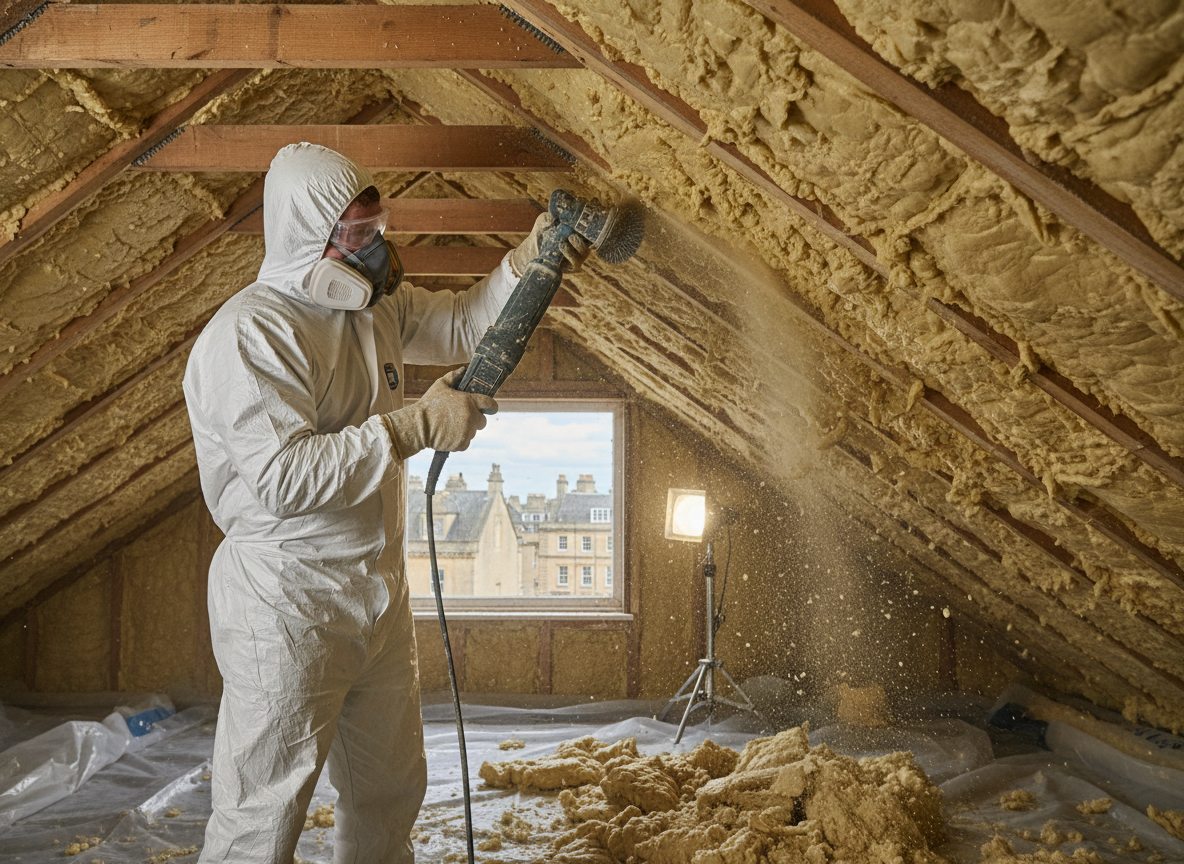
Bath's Georgian and Victorian terraces often feature slate roofs with limited ventilation. Spray foam applied directly to the underside can trap moisture against rafters and battens, accelerating rot in the humid Somerset climate. Removal requires careful cutting and scraping to avoid disturbing historic lath and plaster ceilings below while restoring airflow through eaves and ridge vents.
Edge cases include foam that has migrated into wall cavities or around chimney stacks in properties near the River Avon. These jobs demand sectional disassembly rather than blanket stripping, plus checks for hidden damp in the stonework that the foam has concealed. Local building practices from the 1800s mean many lofts still contain original timber that must be assessed for structural integrity before any new insulation is considered.
Homeowners in areas such as Widcombe or Larkhall frequently discover foam blocking the small high-level vents that older roofs rely on. Professional extraction includes debris containment to protect ground-floor rooms and a final inspection to confirm all foam residue is gone and ventilation is functional again.
Weather patterns in Bath mean most loft work happens between spring and early autumn when roofs are drier. Winter jobs require additional tarping and moisture monitoring because sudden rainfall can drive water under lifted tiles during the removal process.
Technician insight
In Bath, the thing that catches most people out with loft spray foam removal is how often the foam has been sprayed over the original eaves vents in Georgian and Victorian terraces; our damp winters then push moisture along the rafters and into the wall plates before anyone notices.
Widcombe terrace loft
Owner reported persistent damp smells after heavy rain. Inspection showed closed-cell foam blocking every eaves vent in a mid-19th century roof. We removed the foam in sections, cleared the vents and confirmed the rafters had surface mould but no structural loss. Ventilation restored and smells gone within weeks.
How it works
- 1
Initial Loft Inspection
Survey the roof structure, identify foam type and depth, check for timber damage and blocked vents in Bath properties.
- 2
Containment Setup
Protect ceilings, electrics and stored items below while sealing the loft hatch to contain dust and debris.
- 3
Foam Extraction
Cut and remove spray foam in sections, clearing rafters, eaves and any migrated material around chimneys or valleys.
- 4
Ventilation Restoration
Clear blocked air paths and confirm ridge, eaves and tile vents are open and functional.
- 5
Final Clean and Handover
Remove all residue, vacuum the space and provide a written report on the condition of the roof timbers.
Pricing
Upfront quotes after a site visit; cost varies with loft size, foam thickness and access difficulty in older Bath buildings.