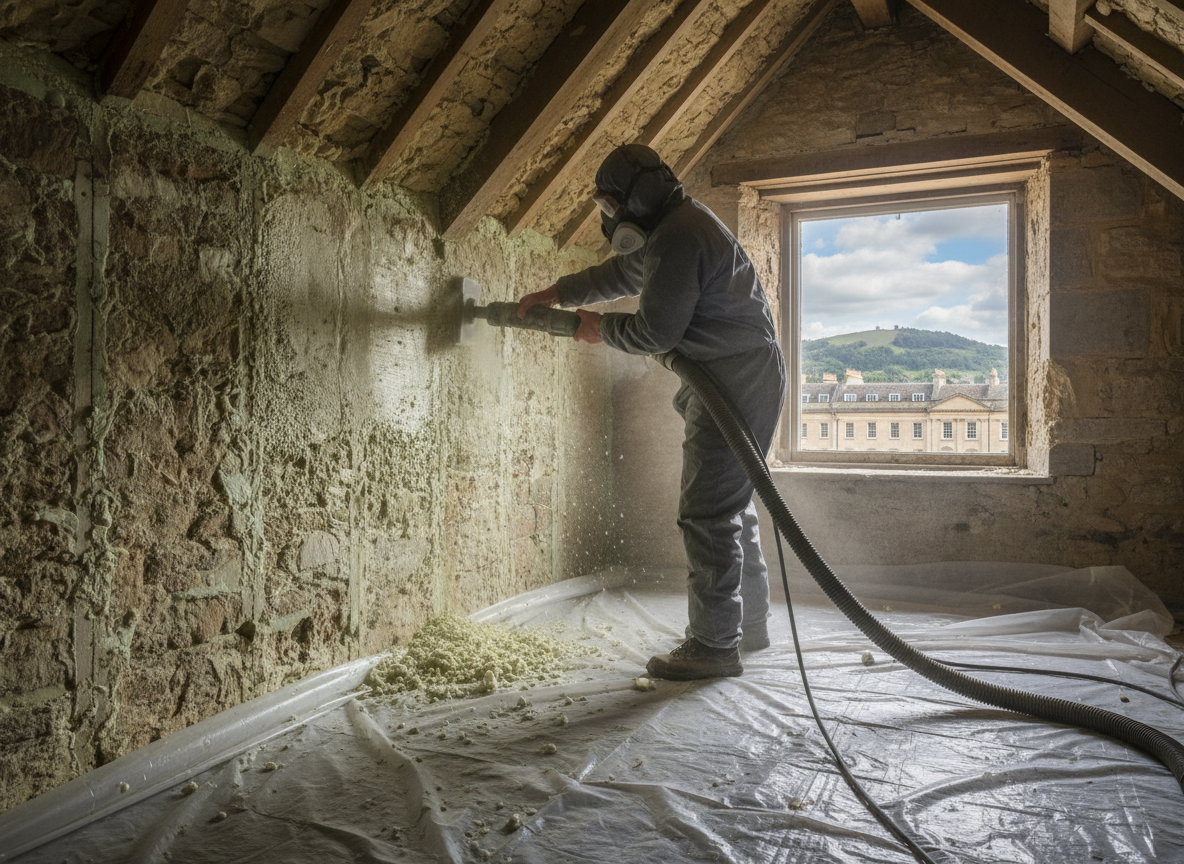
Closed cell spray foam bonds tightly to timber joists and stone in Bath's Georgian and Victorian terraces. Removal requires cutting the foam into sections while protecting original lath and plaster ceilings below. Dust and off-gassing can linger in poorly ventilated roof spaces common along streets like those near the River Avon, so negative air machines and sealed containment become essential on every job.
Somerset winters bring prolonged rain that can trap moisture behind foam layers in solid-wall houses around Bathwick and Widcombe. Technicians must check for hidden rot in rafters before starting extraction because the foam often conceals water damage that only appears once the material is gone. Leaving any residue risks future mould growth when temperatures drop.
Local planning rules for listed buildings in the Bath area mean crews work without power tools that could scar stone or timber. Hand tools and controlled heat methods allow clean separation without structural impact. Every project ends with a full site vacuum to remove fine particles that otherwise settle into floorboards throughout the property.
Technician insight
In Bath, the thing that catches most people out with closed cell spray foam removal is how the foam hides rot in the original rafters of Georgian terraces once winter rain has been trapped for years. Homeowners assume a clean peel but the solid stone walls and narrow roof voids force slower hand work to avoid cracking lath and plaster below.
Foam Removal in a Widcombe Terrace Attic
Homeowner noticed musty smells after heavy autumn rain. Inspection revealed closed cell foam covering saturated rafters in the 1800s terrace. We cut the foam into manageable sections by hand, removed the wet material, and exposed the rot for targeted timber treatment. The space dried out fully with no damage to the listed ceiling below.
How it works
- 1
Site Assessment
Inspect attic and wall cavities to map foam depth and locate any hidden services or rot in Bath stone properties.
- 2
Containment Setup
Install sealed barriers and negative air filtration to protect living spaces from dust during removal.
- 3
Foam Extraction
Cut and peel closed cell foam in sections, working around joists without damaging original timber or plaster.
- 4
Final Clean and Inspection
Vacuum all residue and check surfaces for remaining material before leaving the property.
Pricing
Cost depends on foam thickness, access difficulty in older Bath roofs, and whether additional timber repairs are needed after extraction.