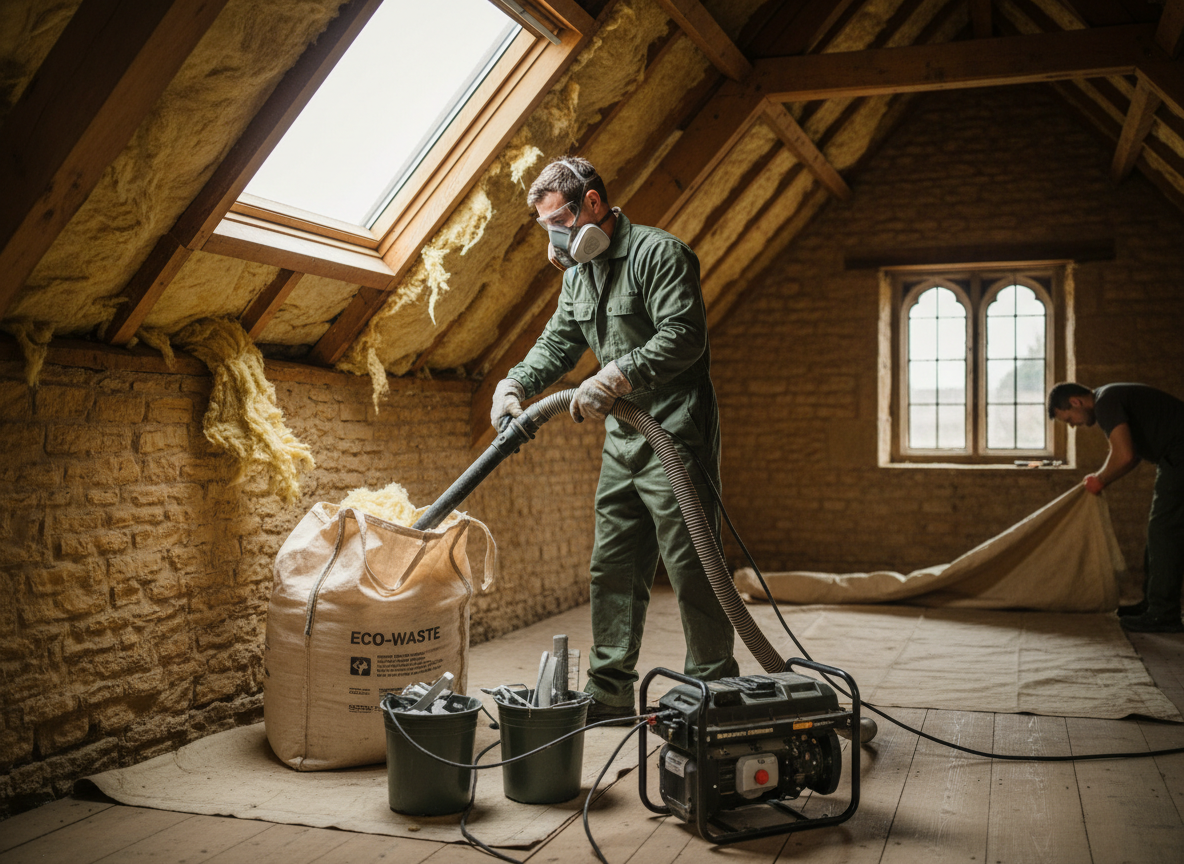
Bath's Georgian and Victorian stone terraces often received spray foam insulation in lofts or under floors during later retrofits, yet the material frequently traps moisture against the porous limestone and lime mortar. Once winter temperatures drop and rain persists through the season, that trapped vapour pushes back into the structure, staining ceilings and softening joists. Removing it requires isolating each room, using negative-pressure tents, and cutting the foam in sections rather than ripping it free so the underlying stone can dry without further damage.
The narrow lanes around the city centre and the steep approaches in Widcombe or Bear Flat limit vehicle access, so crews must carry equipment by hand and stage waste bags on the pavement for short periods only. Because Somerset planning rules protect the external appearance of listed buildings, all extraction work stays internal and any ventilation points created during removal must be reinstated to match the original fabric. Homeowners in these properties also need to know that modern closed-cell foams bond tightly to lath and plaster, so solvent-free, citrus-based softeners are applied first to loosen bonds without soaking the historic timbers.
After the foam is lifted, the exposed surfaces are brushed and left open for several days so any residual damp can escape before new insulation is considered. In the Bath area this drying window is essential because the underlying clay subsoil holds water and the constant humidity slows evaporation. Only once moisture readings drop below acceptable thresholds is the space handed back, ensuring the stone walls can continue to breathe as originally intended.
Technician insight
In Bath, the thing that catches most people out with environmentally friendly insulation removal is the way closed-cell foam was sprayed straight onto the back of lath and plaster in Georgian terraces around the centre and in Widcombe; once you start cutting, the plaster often comes away with it and you suddenly have a much bigger repair than the homeowner expected.
Loft foam removal in a Widcombe terrace
The owners noticed black staining on bedroom ceilings after heavy winter rain. We found closed-cell foam had been applied directly to the underside of the stone roof slates, trapping moisture that was now migrating into the plaster. We set up sealed tents, softened and lifted the foam in sections, then left the loft ventilated for five days until readings were safe. The ceilings dried out and no further staining appeared.
How it works
- 1
Site Assessment
Inspect loft, floor voids and wall cavities in the Bath property, checking for hidden damp and access restrictions typical of stone terraces.
- 2
Containment Setup
Erect sealed negative-pressure enclosures and floor protection to keep dust and foam particles inside the work zone.
- 3
Foam Extraction
Apply softening agents, section the foam, and remove it without disturbing original stone or timber.
- 4
Waste Removal & Drying
Bag all material for licensed disposal, then ventilate the space to allow the structure to dry before handover.
Pricing
Cost depends on access difficulty in Bath's older homes, depth of foam, and whether multiple rooms or floors are involved.