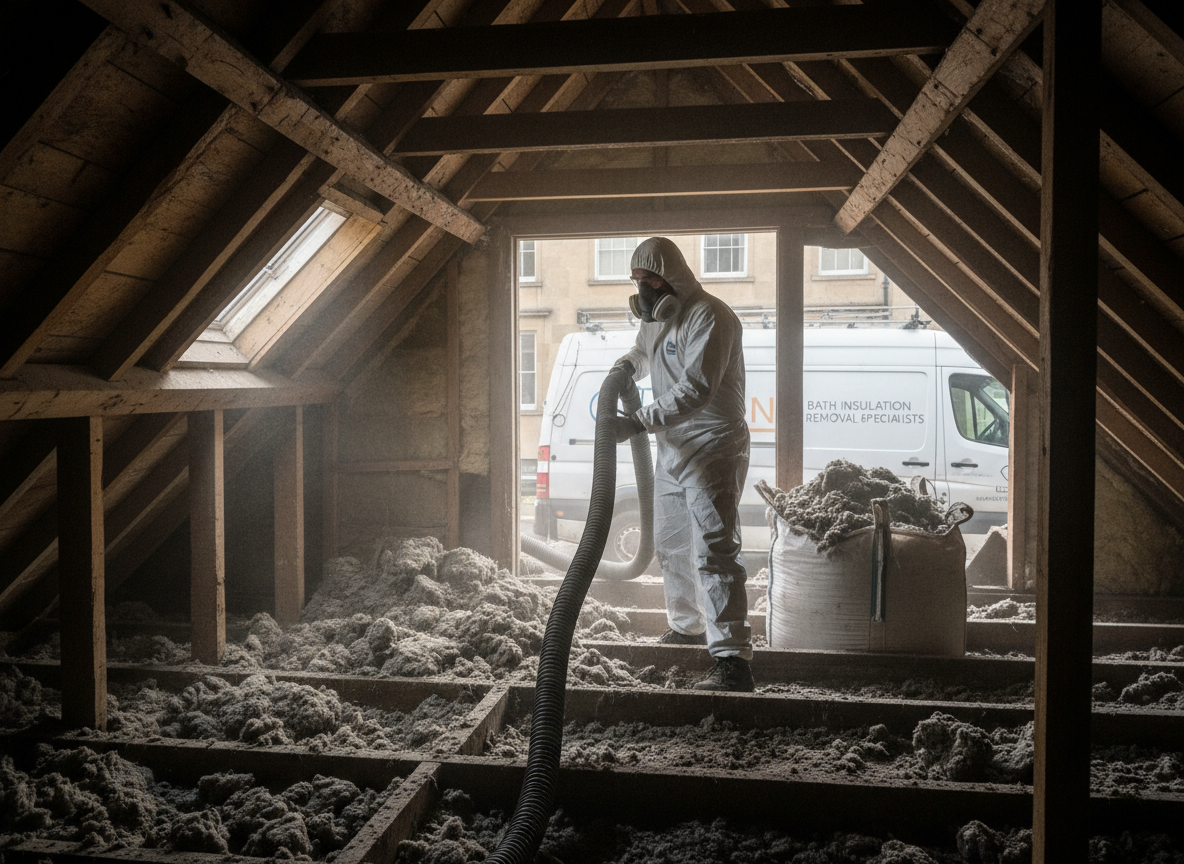
Bath's housing stock is dominated by Georgian and Victorian terraces built with solid stone walls and pitched roofs that often received spray foam in the 2000s to meet energy targets. Removing that foam requires isolating the work area with plastic sheeting and negative air machines because the material can release particulates that settle on original plaster and timber. Crews work from the Cambridge House base and reach jobs in Widcombe, Walcot, and Larkhall within minutes, allowing same-day mobilisation when residents report musty odours after heavy rain.
Edge cases appear regularly in properties where foam was applied directly to the underside of stone tiles or between rafters without a vapour barrier. In these situations the foam bonds to the substrate and must be cut away in small sections to avoid cracking the roof covering. Local building control expects any exposed insulation voids to be reinsulated with breathable materials that suit the solid-wall construction typical of BA1 and BA2 postcodes.
Weather patterns in the Bath area add another layer of planning. Prolonged wet winters leave roof voids damp, so removal crews first install temporary ventilation and moisture monitoring before cutting begins. This prevents water ingress through newly opened gaps and keeps the job on schedule even when temperatures drop below freezing.
Homeowners sometimes discover that previous foam installations blocked the original eaves ventilation, leading to condensation on ceiling joists. During removal the team restores those airways and documents the condition for any future surveyor reports required when selling period homes.
Technician insight
In Bath, the thing that catches most people out with insulation removal service is how tightly the foam bonds to the back of stone tiles in Georgian roofs; once you start cutting you often find the original battens are already compromised by trapped moisture, so the job expands on site.
Widcombe Terrace Loft Clearance
Homeowner noticed black mould along ceiling joists after winter storms. Inspection revealed spray foam blocking all eaves vents in a 19th-century stone terrace. We removed the foam in sections, restored airflow, and left the loft dry with no damage to the original roof structure.
How it works
- 1
Site Assessment
Inspect loft or wall cavities, note construction type and access routes through Bath terraces.
- 2
Containment Setup
Install dust barriers and negative air units to protect original plaster and timber features.
- 3
Foam Extraction
Cut and remove spray foam in controlled sections, bagging waste for licensed disposal.
- 4
Ventilation Restoration
Clear blocked eaves and install breathable materials suited to solid stone walls.
- 5
Final Clean and Handover
HEPA vacuum surfaces and provide written record of works for property files.
Pricing
Pricing reflects property age, roof pitch access and volume of foam present in Bath's older terraces.