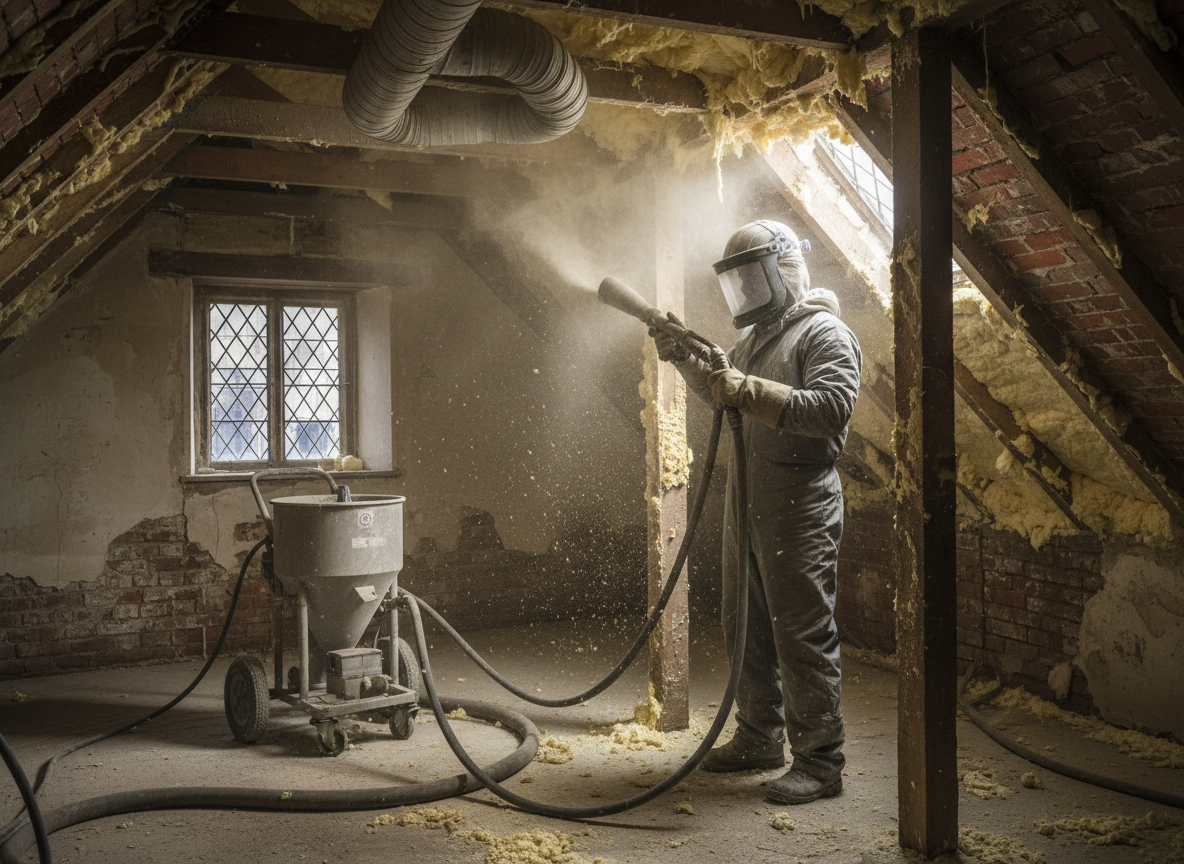
Bath's Georgian terraces and Victorian villas often received spray foam in lofts during the 1990s and 2000s to combat heat loss through slate roofs. Over time the foam degrades, traps moisture against limestone walls, and creates the musty smell residents notice in winter. Sand blasting removes the material at low pressure so the original lath and plaster or timber joists stay intact, something critical when working inside listed buildings where any visible damage triggers planning issues.
Somerset's frequent rain and high humidity mean the work must be sequenced carefully. We set up sealed polythene corridors from the loft hatch to the street so silica dust never reaches the rest of the house. After blasting, every surface is HEPA vacuumed twice and the waste is bagged for licensed disposal rather than left in skips that could contaminate the local drains running into the Avon.
Access in central Bath is usually via narrow rear lanes or through the house itself. Properties on hills such as Lansdown or Widcombe often have stepped rooflines that require extra scaffolding towers. The operator must watch for hidden flues and electrical cables that run through the foam; disturbing either creates immediate safety and repair costs for the owner.
Homeowners sometimes attempt DIY removal with rented equipment and quickly discover the dust travels through every gap in the ceiling. Professional containment and negative-air machines prevent that migration and keep the job to a single day rather than a week of cleaning.
Technician insight
In Bath, the thing that catches most people out with sand blasting spray foam insulation removal is the dust travelling through gaps between floorboards into the rooms below. Georgian terraces have uneven ceilings and hidden voids that standard plastic sheeting never seals; once the silica gets into the plaster, it takes days of extra cleaning. We always run negative air from the loft straight out the rear window facing the lane behind the property.
Lansdown Terrace Loft
Homeowner noticed damp patches on bedroom ceilings after heavy autumn rain. Inspection found spray foam bridging a blocked gutter and trapping moisture against the stone parapet. We set up containment through the top-floor hatch, blasted the foam clear in one day, and confirmed the original rafters were sound before leaving the site clean.
How it works
- 1
Site Assessment
Inspect loft, identify foam type, note any wiring or flue runs, and measure access constraints typical of Bath terraces.
- 2
Containment Setup
Install sealed polythene tunnels and negative-air filtration to keep dust inside the work zone.
- 3
Sand Blasting Removal
Use low-pressure media to strip foam from joists and roof boards without abrading historic timbers.
- 4
Final Clean and Disposal
Double HEPA vacuum, wipe-down, and bag all waste for licensed removal from the city centre.
Pricing
Price depends on loft size, number of access points, and whether scaffolding is needed on stepped Bath roofs. Upfront quote after inspection.