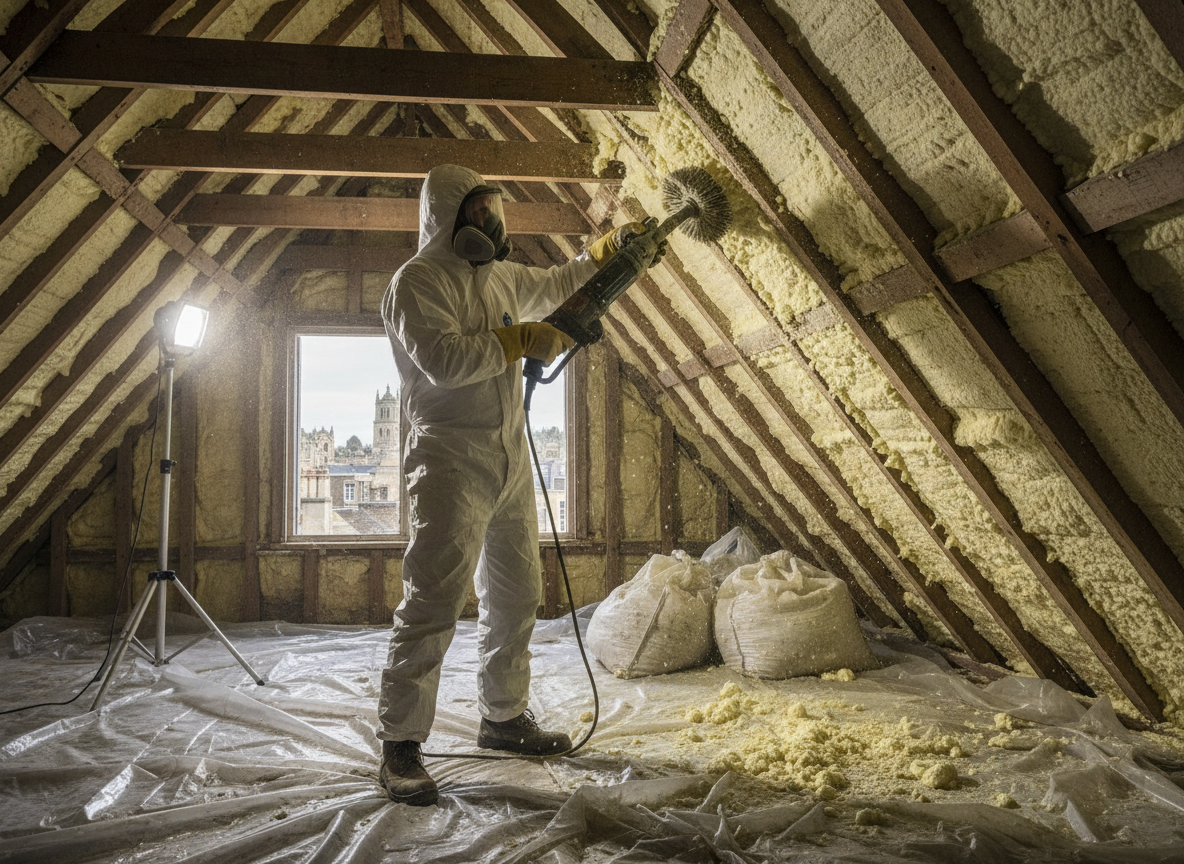
Bath's Georgian and Victorian housing stock features thick stone walls, lime plaster, and exposed timber joists that trap spray foam differently than modern builds. Thermal removal must account for the way closed-cell foam bonds to porous Bath stone, often pulling surface material if heat and scraping techniques are not calibrated precisely. Winter damp from the Somerset levels and the River Avon catchment increases moisture behind foam layers, creating hidden mould pockets that only surface once insulation is stripped. Operators working 24/7 from Cambridge House, Henry Street, routinely inspect for these conditions before starting any job.
Edge cases in Bath include listed buildings where foam was applied over original lath and plaster ceilings. Aggressive heat guns can scorch historic timber, while insufficient ventilation during removal allows solvent vapours to linger in poorly sealed chimney breasts common to the city centre. Crews must also watch for lead paint layers beneath later coatings, a frequent discovery in pre-1919 terraces around Widcombe and Walcot. Safe removal sequences therefore combine low-temperature thermal tools with hand scraping and HEPA vacuuming to protect both the fabric of the building and indoor air quality.
Regulation notes for the Bath area require care around conservation zones; disturbing original stonework without proper containment can breach local planning conditions. Thermal spray foam removal also generates off-gassing that must be managed when properties sit close together along narrow streets such as those near the Circus or Royal Crescent. Experienced teams sequence work to avoid peak tourist hours and ensure neighbouring homes remain unaffected by dust or odour migration.
Homeowners often discover foam was installed over existing damp-proofing failures, especially in lower ground-floor rooms of properties built on the sloping terrain around Lyncombe and Widcombe. Removing the foam without first addressing water ingress simply returns the problem. Thorough inspection of gutters, downpipes and ground levels around each property precedes any thermal work to prevent repeat failures once the insulation is gone.
Technician insight
In Bath, the thing that catches most people out with thermal spray foam removal is how readily the foam pulls flakes of original Bath stone or lime plaster when heat is applied too quickly. Georgian terraces around the centre often have uneven wall surfaces and previous patch repairs that create hidden weak spots; rushing the scrape stage leaves pockmarks that are expensive to make good later. The constant damp from our winters also means you nearly always find mould colonies once the foam is off, so the job routinely expands beyond simple insulation removal.
Widcombe Terrace Ceiling Job
Homeowner called after noticing musty smells in a first-floor bedroom of a mid-terrace built around 1840. We found closed-cell foam applied directly over original lath and plaster that had already failed in two places. Low-temperature thermal tools plus hand scraping removed the foam without collapsing the ceiling; we then vacuumed residues and confirmed the lath was still sound before handing over for replastering.
How it works
- 1
Site Assessment
Inspect foam depth, substrate condition and any moisture issues in the specific Bath property.
- 2
Containment Setup
Seal rooms and protect historic features before thermal equipment is introduced.
- 3
Thermal Removal
Apply controlled heat to soften foam then scrape and vacuum in stages to avoid substrate damage.
- 4
Final Clean and Inspection
Remove residues, check for hidden mould or damp, and advise on next steps for the exposed surfaces.
Pricing
Cost depends on property age, foam thickness, access constraints and whether hidden damp or mould is discovered during removal.