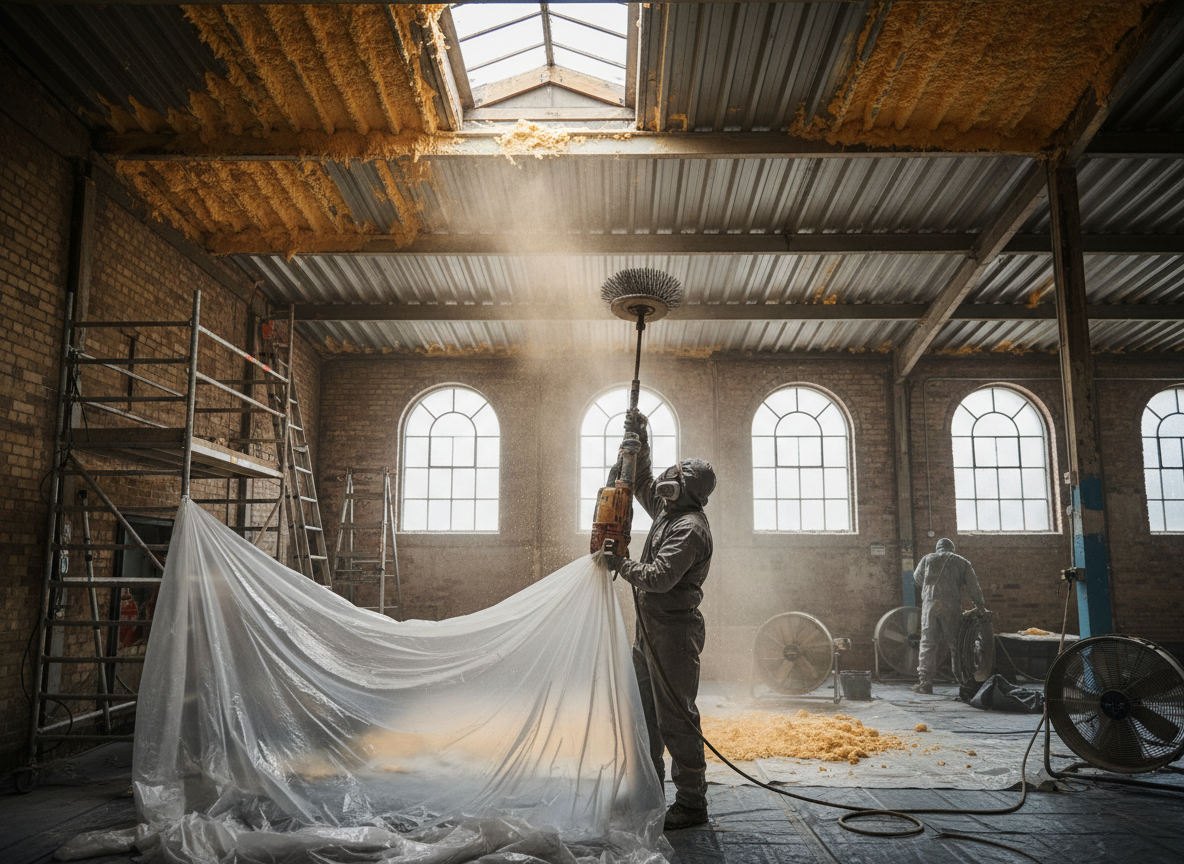
Bath's older industrial buildings often feature thick layers of closed-cell spray foam applied decades ago for insulation on metal roofs and concrete walls. Removing it requires careful cutting and scraping to avoid damaging original structures that predate modern building codes. Damp Somerset winters can cause the foam to bond more tightly to substrates, increasing the time needed for clean separation without leaving residue that traps moisture.
In warehouse settings around Bath, foam removal frequently uncovers hidden issues such as corroded steel beams or outdated electrical runs that must be addressed before any new insulation goes in. Crews work section by section to maintain ventilation and contain dust, especially in spaces still used for storage. Proper disposal follows local waste rules for construction materials common in the Bath area.
Edge cases include foam installed over asbestos-containing panels in mid-century warehouses near the river, requiring extra containment steps. High ceilings in these buildings demand scaffolding or lifts, and the narrow access roads in central Bath can limit equipment size. Owners should expect longer timelines when work occurs during the wetter months when surfaces stay damp longer.
Technician insight
In Bath, the thing that catches most people out with warehouse spray foam removal is how the damp clay soils and frequent rain keep older metal-clad buildings humid inside, making the foam grip tighter to the steel than it ever does in drier inland counties.
Old riverside warehouse near Pulteney Bridge
The owner needed the foam stripped from a 1960s storage unit before leasing. We found the foam had trapped condensation against the metal roof sheets, causing widespread rust. After section-by-section removal and vacuuming, the steel was left clean and dry for the new tenant's inspection.
How it works
- 1
Site Assessment
Inspect the warehouse interior, measure foam depth, and check for hidden hazards in Bath buildings.
- 2
Containment Setup
Isolate the work zone with plastic sheeting and negative air to protect stored goods and adjacent spaces.
- 3
Foam Extraction
Cut and remove sections using handheld tools, working from the top down to control debris.
- 4
Surface Cleaning
Scrape residue and vacuum the substrate before final inspection and waste removal.
- 5
Final Clearance
Dispose of materials at approved Somerset sites and confirm the space meets client requirements.
Pricing
Cost depends on warehouse square footage, foam thickness, and access difficulty; upfront quotes provided after site visit.